
Welcome to the Newsletter Archive
Check out the archive to find past issues of our monthly newsletter. Here’s what you can expect to find in each issue:
Announcements about upcoming garden tours, plant sales, and field trips
Updates on local, state, and national efforts to support monarchs
Ideas for how you can become involved in habitat restoration, political advocacy, and community science.
What to see in the May Newsletter…
Details about May events including the wonderful Eco-Friendly Garden Tour on May 9th.
Information about a butterfly ID clinic coming up on June 13 and two butterfly counts that will be held in Central Marin on June 21st and Point Reyes on July 18th.
An informative article about how to talk to your neighbors about (not using) pesticides
Description of huge milkweed restoration project in Imperial Valley
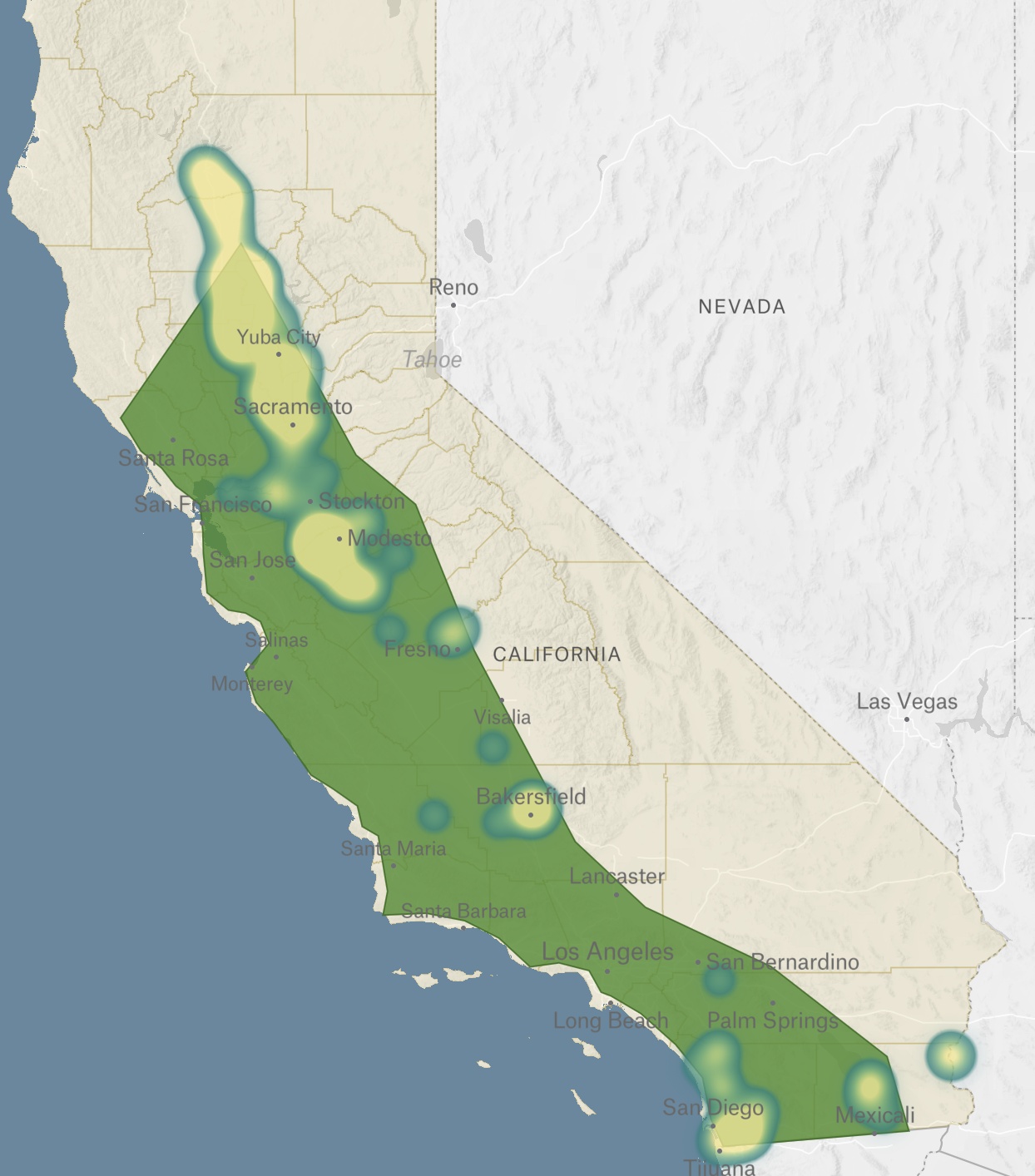
The May Newsletter describes an amazing new a project by the River Partners to plant **15 million** milkweed plants along a primary migration corridor extending from Redding and through the Imperial Valley almost to the Mexican border. Click here to read more about this ambitious project.
The green area in this map indicates the high priority early breeding zone for Western Monarchs. The blue-green and yellow areas show where River Partners have focused their restoration efforts since 1998, with yellow indicating areas where the most intensive work has occurred.
What to see in the April Newsletter:
Many great plant sales as well as talks, garden open houses, and events for kids that took place in April, which was Earth month!
What to see in the March Newsletter:
Ideas on how to help monarchs by planting milkweed and native nectar plants…with tips on where to buy to find seeds and plants in Marin
Results of Western Monarch count of overwintering monarchs
New research showing how certain characteristics of good overwintering sites related to monarch overwintering abundance
What makes a good overwintering site?
The number of overwintering monarchs along the California coast has dropped drastically over the last decade. Environmentalists have long known that loss of habitat and climate change were contributing the decline.
But a recent study conducted at Pismo Beach found that the specific structure of overwintering groves was also very important to the survival of the overwintering monarchs. After monitoring monarchs there for six seasons, researchers found that the butterflies prefer large trees in the interior section of groves where they are partially shaded and sheltered by smaller trees and shrubs from the wind and rain. Amazingly just 11 of 320 trees at the site hosted 84% of the monarchs over six years, and 251 trees never hosted a single butterfly.
They also found that the strongest climate effect was from rain, with wetter conditions associated with lower counts.
This information suggests that support for overwintering monarchs is not about “saving groves” in general, but of prioritizing certain specific grove features.

What to see in the February newsletters:
Results of Western Monarch count show another low year at coastal overwintering sites
Recent research sheds light on how monarchs’ magnetic sense helps them migrate…read the brief summary of that work here.
In Pursuit of the Monarch’s Magnetic Sense
One of the most amazing things about monarchs is their ability to fly a thousand miles or more to specific overwintering sites targeted by previous generations of migrants. Animals rely on an array of cues to navigate, including the position of the sun and stars, the polarization of light, a memory for geographical landmarks and more.
Of all of these, the magnetic sense — the brain’s ability to detect Earth’s magnetic field with a compasslike sensitivity — remains the most elusive.
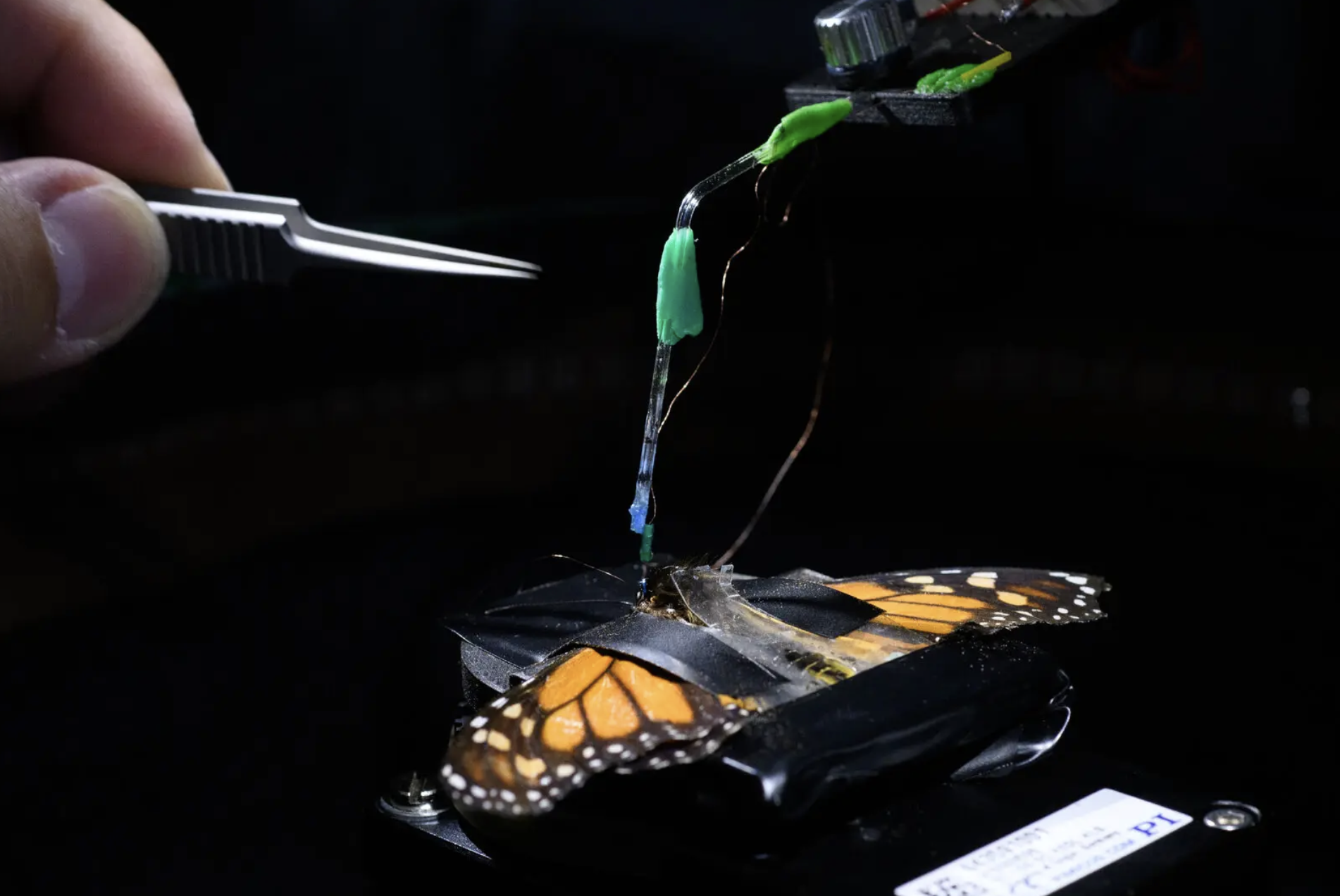
Recent research by Norwegian neurobiologist Robin Grob — reported in the New York Times in December of 2025 — investigates how monarchs rely on the magnetic field to navigate.
Grob’s team members surgically insert tiny electrodes into the brain of a monarch. The butterfly is then placed in a flight simulator and allowed to fly through a carefully controlled magnetic field. The researchers were then able to record the moment that the monarch senses the magnetic field that guides members of its species across the continent.
What to see in the January newsletter:
how scientists use radio tags to track butterfly migration patterns
Department of Interior delays consideration of endangered species protection for monarchs and other threatened insects
Researchers can now attach miniature solar-powered tags to monarch butterflies and you can help keep track of where they go!
The tags emit a Bluetooth signal that is detectable by anyone with a Project Monarch app. The app records the detection and sends the data to a central server, building a massive map of monarch migration routes.
How you can get involved:
Search for Project Monarch Science in the Apple App Store (for iOS or iPad) or the Google Play Store (for Android).
Scan: Open the app and keep your Bluetooth turned on when you are outdoors in natural areas.
Contribute: When your phone pings a radio-tagged monarch, the app records the encounter, allowing researchers to track population movements across North America